Inflation is supposed to be a number. A percentage. A line in a government report. Something economists argue about while everyone else checks whether groceries, rent, gas and subscriptions are still quietly eating the paycheck.
But markets do not treat inflation like a boring spreadsheet cell. They treat it like the Demogorgon from Stranger Things: even when you think it has been contained, it finds a new wall to crawl through.
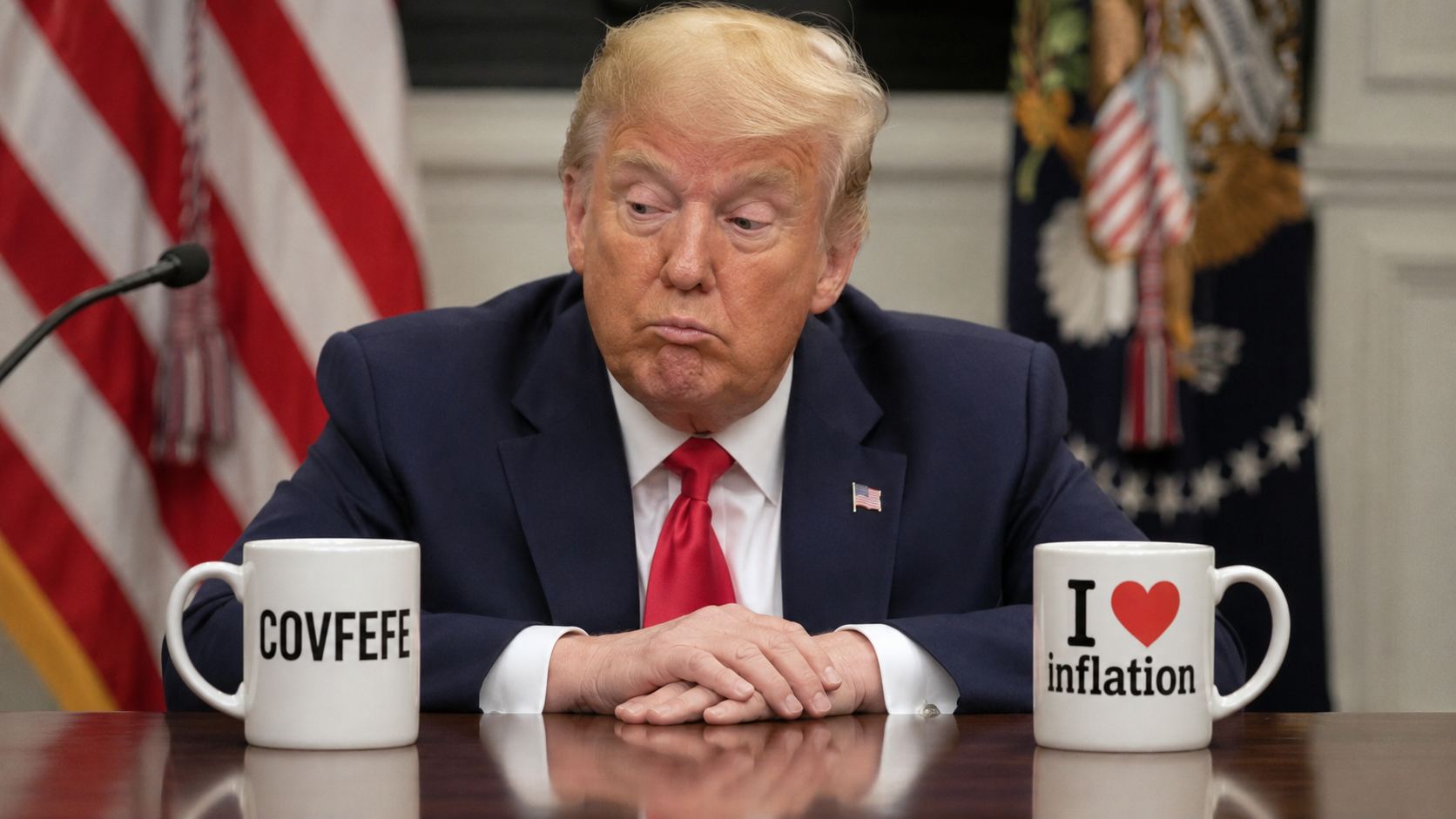
That is why Donald Trump saying “I love the inflation” was never going to land as just another political soundbite. According to The Guardian, the line came after May CPI showed U.S. inflation at 4.2%, a three-year high. The report was broadly in line with expectations, but the tape did not care. The Dow fell 953 points, or 1.87%, the S&P 500 lost 1.62%, and the Nasdaq dropped 1.98%, according to market data cited by TheStreet.
This was not just “stocks hate inflation.” It was the full macro combo: sticky prices, central bank anxiety, oil near $92, U.S.-Iran tension, tech stocks already under pressure, and traders waiting for the next data drop like they had just walked through a fog gate in Dark Souls.
- The line that broke the feed
- CPI: the monster under the bed
- Risk-off mode activated
- Jobs + PPI = the next boss fight
- The 25 bps spell
- So what should investors actually watch?
- Trump, inflation and markets: key questions
The line that broke the feed
“I love the inflation” is the kind of sentence that instantly becomes market fuel because traders do not process it like voters do.
Politics hears a quote. Markets hear a signal.
The signal here was not necessarily that Trump personally wants higher prices. The White House tried to frame the comment as a reaction to pockets of price relief inside the CPI report. But markets are brutally literal when they are nervous. A president appearing relaxed about a hot inflation print, while energy prices are being pushed around by geopolitical risk, is not exactly soothing background music.
Financial markets are machines built to price the future. When inflation rises, investors start asking whether the Federal Reserve can cut rates, whether it may need to keep policy tight for longer, whether bond yields should move higher, whether equity valuations are too rich, and whether growth stocks are suddenly carrying too much duration risk.
That is how one line turns into a feed-breaking moment. Not because a quote alone destroys the market, but because it lands on a pile of dry macro tinder.
CPI: the monster under the bed
CPI stands for Consumer Price Index. It tracks the price of a basket of goods and services that households buy, from food and rent to gasoline, medical care and transportation. In normal human language: it is one of the main ways the market checks whether life is getting more expensive.
The headline number in this report was 4.2% year over year. That means consumer prices were 4.2% higher than a year earlier. The figure was a three-year high and, importantly, it was in line with expectations. That last part matters. Markets do not only react to whether a number is “good” or “bad.” They react to whether it is better or worse than what traders had already priced in.
Then comes core CPI, which strips out food and energy because those categories can swing violently. Core CPI was 2.9% year over year. That is lower than the headline number, which tells us energy was doing a lot of the damage. Reuters reported that energy pressures tied to the U.S.-Iran conflict were a major driver of the inflation jump, while core inflation suggested broader price pressure was more contained for now.
But “contained” is not the same as “dead.” That is the Stranger Things problem. Inflation can look beaten, then reappear through oil, wages, rent, shipping, tariffs, insurance, or some fresh geopolitical mess nobody had in their neat quarterly model.
Markets care less about one CPI print and more about the trend. One hot month can be noise. A run of hot months becomes policy.
Risk-off mode activated
“Risk-off” is market slang for a very simple mood: investors stop asking “how much can I make?” and start asking “how much can I lose?”
That is what happened here. The Dow dropped 953 points, the S&P 500 fell 1.62%, and the Nasdaq lost 1.98%. The tech-heavy Nasdaq was hit hardest because tech stocks are especially sensitive to interest-rate expectations. When rates look higher for longer, the present value of future profits gets marked down. Translation: expensive growth stories suddenly need to justify every decimal point.
Oil near $92 added another layer of pain. Higher oil prices can push gasoline, transport and production costs upward. That can feed headline inflation, hit consumers, squeeze companies and make central banks more cautious about easing policy. Add U.S.-Iran tension and the market starts pricing not just today’s oil price, but tomorrow’s potential supply shock.
This is why markets can fall even when CPI is “in line.” In isolation, 4.2% CPI was not a surprise ambush. But CPI was not alone. It arrived with oil pressure, geopolitical escalation, stretched tech valuations and a calendar full of more macro risk. That is how a normal trading day becomes a full risk-off episode.
Jobs + PPI = the next boss fight
Markets did not get to rest after CPI. They immediately started looking toward jobless claims and PPI.
Jobless claims measure how many people are filing for unemployment benefits. Traders watch them because the labor market is central to the inflation story. If employment stays strong, consumers may keep spending, wages may stay firm, and the Fed may feel less urgency to cut rates. If claims rise sharply, the growth outlook starts looking weaker, and the rate-cut conversation can change fast.
PPI stands for Producer Price Index. While CPI looks at prices paid by consumers, PPI tracks prices received by producers. It is basically inflation further up the supply chain. If companies are paying more for inputs, materials, logistics or energy, investors ask whether those costs will eventually be passed to consumers.
This is the Dark Souls rhythm of macro trading. CPI boss defeated? Fine. Now enter the PPI arena. Survive that? Here come jobless claims. Then retail sales. Then the Fed. Then the ECB. Then oil inventories. There is always another fog gate.
The point is not that every data release is equally important. The point is that markets build a narrative from connected clues. CPI says prices are hot. PPI can show whether more pressure is coming. Jobless claims can show whether the economy is strong enough to absorb tighter policy. Together, they shape what traders think central banks will do next.
The 25 bps spell
Now for the phrase that makes normal people close the tab: basis points.
A basis point is one-hundredth of a percentage point. So 25 basis points equals 0.25 percentage point. If a central bank raises rates from 2.15% to 2.40%, that is a 25 bps increase. The CME Group explains the same basic math: one basis point equals 0.01%.
Why do markets obsess over 25 bps? Because interest rates are the gravity setting for the financial universe.
When rates rise, borrowing gets more expensive. Companies pay more to finance expansion. Consumers pay more on loans. Bonds become more competitive versus stocks. Currencies can move as investors chase yield. Crypto can wobble because speculative assets tend to hate tighter liquidity.
The brief also points to the European Central Bank being expected to hike by 25 basis points to 2.4%. Even if that sounds tiny, markets do not treat it as tiny. A quarter-point move can shift expectations across bonds, equities, foreign exchange and commodities because it changes the path investors imagine for money itself.
Central banks do not need to swing a giant sword. Sometimes 25 bps is enough magic damage.
So what should investors actually watch?
The worst way to read a market day like this is to react to one headline in isolation. “Trump said a thing” is not a framework. “CPI was hot” is not enough either.
A better lens is to watch five connected signals.
First, the inflation trend. Is CPI rising for one month, or is inflation becoming sticky again? Core CPI matters because it shows whether pressure is spreading beyond volatile food and energy.
Second, labor data. Jobless claims and wage trends help show whether the economy is cooling or still running hot.
Third, oil. Energy can move headline inflation quickly, especially when geopolitical risk is involved.
Fourth, central bank language. The Fed and ECB do not only move markets when they change rates. They move markets when they change tone.
Fifth, sector reactions. If tech, industrials, banks, small caps and crypto are all telling the same story, pay attention. If only one corner is panicking, the signal may be narrower.
The clean read is this: markets do not hate inflation because economists told them to. They hate inflation because it scrambles the whole pricing engine. It changes rate expectations, profit assumptions, consumer behavior, oil math, currency flows and risk appetite.
That is why a CPI print can hit stocks, tech, oil, bonds, currencies and crypto all at once. Inflation is not just a number. It is the monster under the bed, the next boss fight, and the reason traders keep one eye on the data calendar even when the headline looks like pure politics.
Trump, inflation and markets: key questions
What did Trump say about inflation?
Trump reportedly said “I love the inflation” after the latest CPI report showed U.S. inflation at 4.2%. Markets focused less on the politics of the quote and more on what sticky inflation could mean for rates.
What is CPI?
CPI, or Consumer Price Index, measures the change in prices paid by consumers for a basket of goods and services. It is one of the most watched inflation indicators.
Why does core CPI matter?
Core CPI excludes food and energy. Traders watch it to see whether inflation is spreading through the economy or mainly coming from volatile categories like oil and gasoline.
Why can oil prices hurt the stock market?
Higher oil prices can push up fuel, transport and production costs. That can lift inflation, pressure consumers, squeeze company margins and make central banks more cautious.
What does 25 bps mean?
25 bps means 25 basis points, equal to 0.25 percentage point. A move from 2.15% to 2.40% is a 25 bps increase.
Why are tech stocks sensitive to inflation?
Tech stocks often depend on future growth expectations. Higher rates can reduce the present value investors assign to future profits, which puts pressure on expensive growth names.
Is this financial advice?
No. This article is for informational and editorial purposes only. It does not provide investment, trading or financial advice.