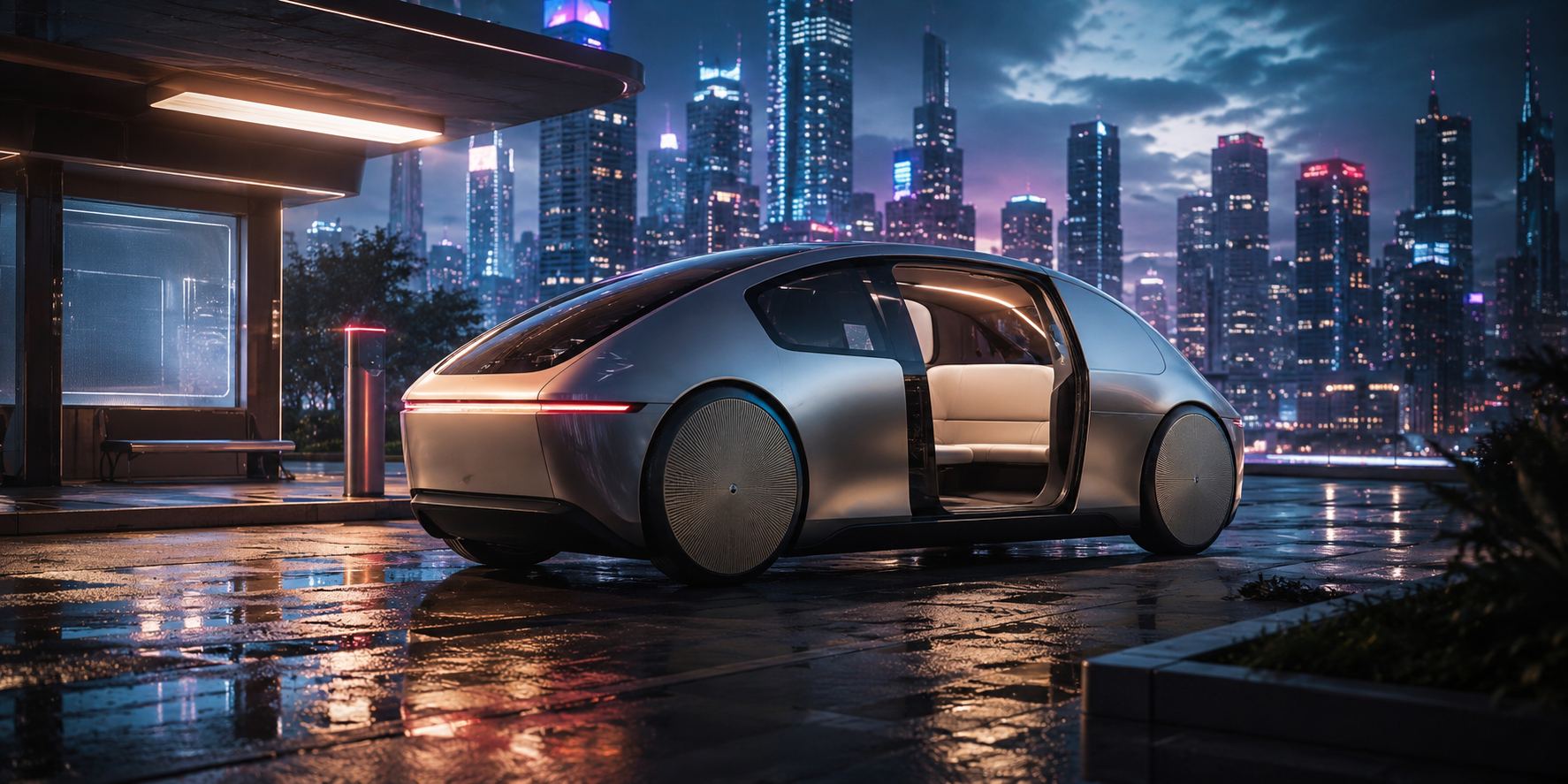
Tesla’s Cybercab has spent years existing primarily as an idea: a purpose-built autonomous vehicle with no steering wheel, no pedals and, eventually, no human driver. Now the harder part is approaching.
Tesla is preparing to put the Cybercab into service in Austin, Texas, with an August rollout reportedly beginning with employee rides before broader public access. The company has already started production, conducted engineering tests on public roads and used Cybercabs for employee rides at its Gigafactory Texas campus.
That makes the next phase fundamentally different from another autonomous-driving demonstration. The question is no longer whether Tesla can make a Cybercab drive itself in public. It is whether the company can turn that capability into transportation people can repeatedly depend on.
And that test will be measured less by what happens on launch day than by what happens during thousands of ordinary rides afterward.
Table of contents
- Austin turns the Cybercab into a real-world test
- The enormous gap between a demo and a service
- The Cybercab metrics that will actually matter
- Where the Cybercab works matters as much as how it works
- Tesla is entering a robotaxi race already in motion
- A successful launch is not the same as a scalable network
- What Cybercab means for Tesla’s AI ambitions
- Tesla Cybercab: key questions
Austin turns the Cybercab into a real-world test
Tesla is not starting from zero in Austin.
The company already operates its Robotaxi service using Model Y vehicles and has expanded autonomous ride-hailing into multiple US markets. According to Tesla’s Robotaxi website, autonomous rides are currently offered in several cities across Texas and Florida.
Cybercab changes the equation because it was designed specifically around autonomy. There is no conventional driver’s seat waiting to take over the job. The production vehicle dispenses with a steering wheel and pedals entirely.
Tesla said in its second-quarter 2026 update that production of Cybercab had started, engineering test drives of production vehicles had begun on public roads, and employee rides had started at the Gigafactory Texas campus in July.
Reuters reported in August that Tesla was preparing for an Austin Cybercab launch beginning with employee rides before a wider rollout.
That sequence matters. Internal passengers provide another layer of testing, but opening the vehicle to ordinary customers introduces a different category of pressure.
A paying passenger does not care that a particular maneuver represents an impressive neural-network achievement. They care whether the car arrives, finds the pickup point, gets them to the destination safely and does so without turning a 15-minute journey into an autonomous-driving debugging session.
That is where robotaxi technology becomes a service.
The enormous gap between a demo and a service
Autonomous vehicles have always been unusually good demo material.
A car navigating an intersection without a human touching the controls is immediately understandable. The technological achievement is visible. Put a passenger inside, remove the steering wheel and the future appears to have arrived.
Transportation networks are less cinematic.
A real robotaxi must deal with construction zones, temporary road closures, confusing pickup locations, emergency vehicles, aggressive drivers, pedestrians, cyclists, poor visibility and countless edge cases that rarely fit neatly into a product presentation.
More importantly, it has to do that repeatedly.
Reliability at scale is a different engineering problem from successfully completing a demonstration route.
A system that works beautifully on 99 rides but requires intervention on the hundredth may sound extraordinarily capable. Whether that is acceptable depends on what happened during that intervention, how quickly the fleet recovered and what happens when the network grows from hundreds of trips to millions.
Public deployment exposes those questions in a way controlled testing cannot.
It also introduces passengers who are not Tesla engineers, employees, investors or enthusiasts. They will press the wrong button. They will stand at awkward pickup locations. They will change destinations. They will leave objects behind. They will need help.
Autonomy is only part of the product.
The Cybercab metrics that will actually matter
The most useful evidence about Cybercab will eventually come from operational performance rather than launch footage.
Human intervention rates are among the most important indicators. An autonomous vehicle can have nobody physically driving it while still depending on remote assistance or other forms of operational support. Understanding how frequently that happens—and under what circumstances—is essential to understanding the maturity of the system.
Safety incidents matter for obvious reasons, but raw incident counts alone can be misleading. Fleet size, miles traveled, road conditions and incident severity all matter when evaluating autonomous-driving safety.
Uptime and availability will reveal whether Cybercab can function as transportation rather than a technological attraction. A robotaxi that works reliably but is rarely available is still a poor mobility service.
Then there is the less glamorous issue of pickup and drop-off reliability. Finding a passenger outside an airport, apartment complex, crowded venue or poorly mapped entrance can be surprisingly difficult. A robotaxi network has to solve the entire journey, not merely stay inside its lane.
Passenger experience matters too. How easily can someone modify a trip? What happens if a rider needs assistance? How quickly can support respond when something goes wrong? How clean are vehicles between rides?
None of these questions look as futuristic as a car without a steering wheel.
They are exactly what will determine whether people want to use one twice.
Where the Cybercab works matters as much as how it works
One of the easiest ways to misunderstand autonomous-driving progress is to treat autonomy as binary.
Either the vehicle drives itself or it does not.
In practice, autonomous systems operate within an operational design domain: the collection of roads, conditions, environments and situations in which the system is designed to function.
That makes Cybercab’s geographic footprint especially important.
A service operating reliably inside a carefully selected portion of Austin can demonstrate meaningful technological progress without proving that the same system is ready for every American city. Expanding into different road layouts, weather conditions and traffic cultures introduces new challenges.
Rain matters. Night driving matters. Construction matters. Dense downtown streets and suburban roads create different problems.
The size of the map therefore tells only part of the story. The variety of environments inside that map matters as well.
Tesla’s broader strategy makes this particularly interesting because the company has emphasized a camera-based autonomous-driving architecture rather than the lidar-heavy sensor stacks used by some competitors.
If that approach can operate robustly across increasingly diverse environments, it could have major implications for deployment economics.
But that conclusion requires deployment evidence, not simply architectural elegance.
Tesla is entering a robotaxi race already in motion
Cybercab will inevitably be compared with Waymo and other autonomous-mobility projects, but reducing the industry to a Tesla-versus-Waymo scoreboard misses the larger technological experiment.
Companies are effectively testing different answers to the same question: what combination of sensors, software, operational restrictions, fleet infrastructure and human support can make autonomous transportation work economically at scale?
Tesla brings an unusual set of advantages to that problem.
It manufactures vehicles at enormous scale, operates a large consumer fleet capable of generating driving data, develops its own autonomy software and now has a vehicle designed specifically for robotaxi operation.
But purpose-built hardware does not eliminate the operational challenge.
Other robotaxi companies have spent years learning that autonomous mobility involves much more than driving software. Fleet maintenance, charging, cleaning, remote assistance, customer support, mapping and local operations all become part of the system.
Tesla now has to demonstrate its own answer to those problems.
The winning robotaxi platform may not simply be the vehicle with the most impressive autonomous-driving stack. It may be the company that can combine autonomy with boring, repeatable and cost-efficient fleet operations.
A successful launch is not the same as a scalable network
There will probably be plenty of attention around Cybercab’s first public rides.
That is understandable. A production vehicle carrying passengers through a city without conventional driving controls is visually striking technology.
But launch day is almost the least interesting part of the experiment.
The meaningful period starts afterward.
Can Tesla increase the number of Cybercabs without intervention rates rising? Can vehicles remain available during peak demand? Can the service expand its geographic boundaries without degrading performance? Can remote support handle a growing fleet efficiently? Can Tesla maintain, charge and clean enough vehicles to keep utilization high?
Those are scaling questions.
They also create an uncomfortable reality for every autonomous-driving company: a robotaxi can be technically autonomous while the network surrounding it remains extremely dependent on humans.
Remote operators, maintenance crews, customer-support teams, cleaning staff and fleet managers all contribute to the economics of the service.
Removing the driver is therefore not the end of the optimization problem. It is the beginning of a different one.
A scalable robotaxi system has to reduce the human labor required per passenger mile while maintaining safety and reliability as the fleet expands.
Cybercab’s first months in operation should begin revealing how close Tesla is to achieving that.
What Cybercab means for Tesla’s AI ambitions
Tesla has increasingly asked the world to evaluate it as more than an electric-car manufacturer.
Autonomous driving, robotics and artificial intelligence sit at the center of that argument. Cybercab is one of the clearest opportunities for Tesla to translate those ambitions into a product whose performance can be observed in the physical world.
That also makes the vehicle unusually unforgiving.
Software demos can be updated. AI models can improve quietly behind an interface. An autonomous vehicle operates inside a chaotic environment shared with pedestrians, cyclists and human drivers.
Its mistakes are physical.
If Cybercab delivers reliable rides, expands into increasingly complex environments and requires progressively less human assistance, Tesla will have stronger evidence that its AI capabilities can move beyond driver-assistance software and into large-scale autonomous systems.
If deployment remains geographically narrow, operationally intensive or heavily dependent on human support, the vehicle could still represent significant engineering progress without validating Tesla’s broader vision of autonomous transportation.
That distinction matters.
The Cybercab does not need to prove that robotaxis have conquered transportation by September. No serious autonomous-driving program should be judged on such a compressed timeline.
But the next stage does require something Tesla presentations cannot provide: mundane evidence accumulated through real use.
Successful pickups. Uneventful journeys. High uptime. Low intervention rates. Expanding service areas. Passengers who stop thinking about the technology and simply use it to get somewhere.
For years, the autonomous-vehicle industry has been extremely good at showing us the future.
Cybercab’s real test is whether that future can finally become boring enough to work.
Tesla Cybercab: key questions
What is the Tesla Cybercab?
Cybercab is Tesla’s purpose-built autonomous two-seat electric vehicle designed for its Robotaxi network. The production design has no conventional steering wheel or pedals.
Is Cybercab already carrying public passengers?
Tesla has produced Cybercabs, tested production vehicles on public roads and used them for employee rides. An Austin rollout is being prepared, with broader passenger access expected to follow the initial phase.
How is Cybercab different from Tesla’s existing Robotaxi service?
Tesla’s Robotaxi network initially uses Model Y vehicles. Cybercab was designed specifically for autonomous ride-hailing and is intended to become a major part of the fleet over time.
What will determine whether the Cybercab launch is successful?
The most useful indicators will include safety performance, intervention frequency, uptime, geographic coverage, ride availability, pickup reliability and passenger experience.
Why are human interventions important?
They help reveal how independently the autonomous system can operate. A service can remove the driver from the vehicle while still relying on humans elsewhere in the operational loop.
Does a successful Austin launch prove Cybercab can scale nationally?
No. Reliable operation in one defined environment is an important milestone, but expansion into new cities, weather conditions and road environments creates additional challenges.
Why does Cybercab matter beyond Tesla?
It is another major test of whether autonomous-driving technology can evolve from controlled demonstrations and limited deployments into reliable, economically scalable everyday transportation.