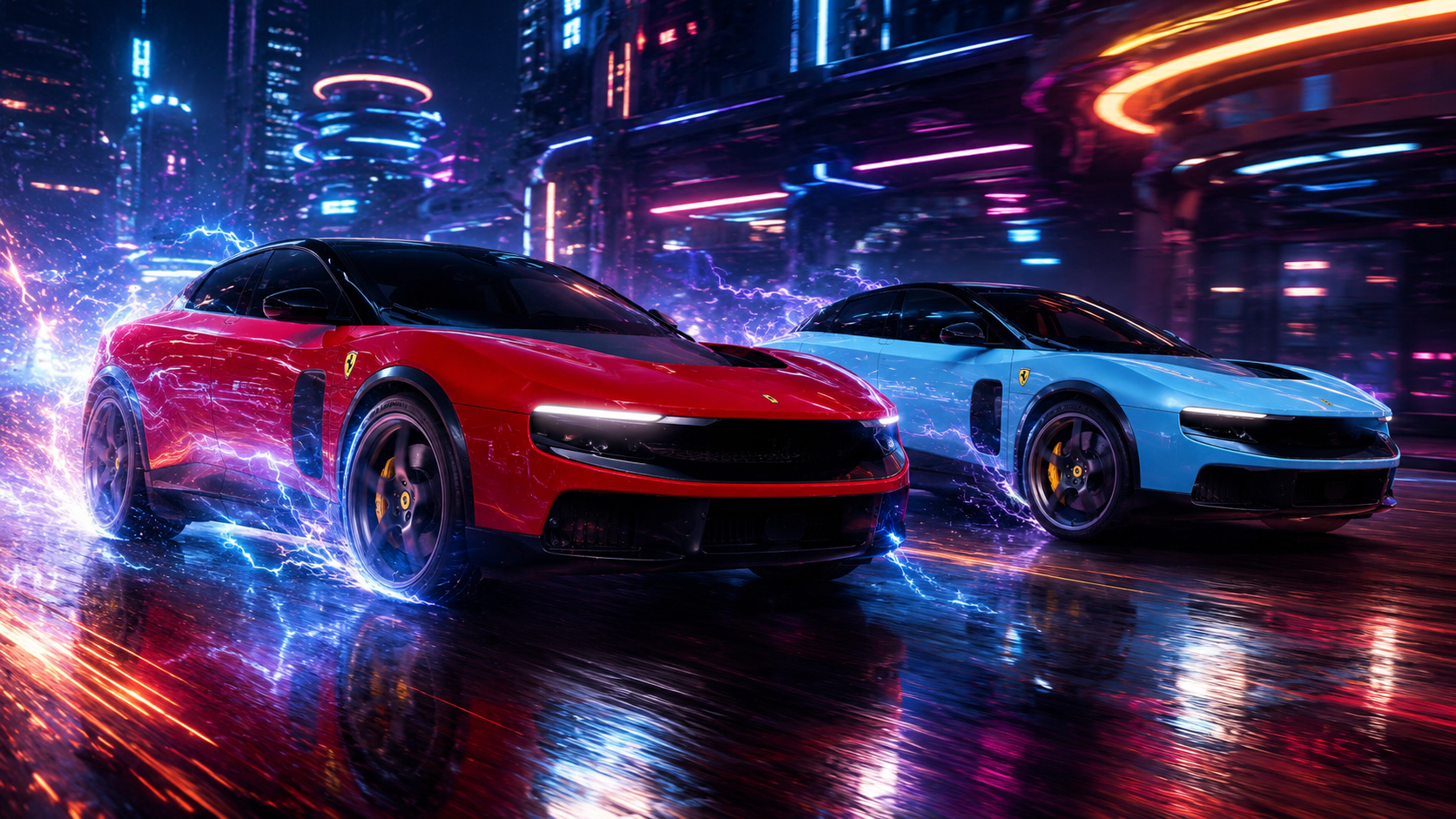
Ferrari has finally crossed the electric Rubicon. The Prancing Horse has unveiled the Luce, its first fully electric model, and the reaction is exactly what you would expect from a €550,000 Ferrari EV co-shaped by Jony Ive’s LoveFrom: fascination, admiration, and a healthy amount of purist panic.
For investors watching Ferrari N.V. ($RACE), the launch lands at a delicate moment. Analysts remain broadly positive on the stock, the order book still looks strong, and Ferrari’s margins remain the envy of the auto industry. But the Luce is more than another halo car. It is a test of whether Ferrari can translate scarcity, emotion, and mechanical theatre into an electric age without losing the thing that makes Ferrari Ferrari.
- Analysts still like Ferrari
- The Luce is Ferrari’s electric stress test
- A polarizing design, by design
- What it means for RACE stock
- Next earnings date
- Ferrari stock: key questions
Analysts still like Ferrari
Wall Street is not running away from Ferrari. Recent third-party consensus data points to a broadly positive analyst stance on $RACE, with ratings generally landing around Moderate Buy or Outperform, depending on the platform.
MarketBeat lists a consensus price target of about $469 from 16 analysts, with a high target of $570 and a low target of $410. That implies meaningful upside from recent prices around the mid-$300s, though these numbers move quickly and should not be treated as a prediction carved into carbon fiber. MarketBeat’s Ferrari analyst forecast shows the spread between the bull and bear cases clearly.
MarketScreener, using a separate data set, shows 18 analysts with an Outperform consensus and an average target price in euros. The exact upside differs because of currency, timing, and methodology, but the big picture is similar: analysts are still giving Ferrari credit for pricing power, brand strength, rich margins, and disciplined production.
That optimism comes with a catch. Ferrari is not cheap. A valuation around the low-to-mid 30s on forward earnings means the market already expects a lot: continued demand, strong personalization revenue, resilient luxury buyers, and smooth execution on electrification.
The Luce is Ferrari’s electric stress test
The Luce is not just Ferrari’s first EV. It is a brand experiment with four wheels, five seats, and a price tag that makes most luxury EVs look like grocery carts.
According to Reuters, Ferrari unveiled the Luce in Rome on May 25, 2026. The car is priced at around €550,000, with deliveries expected to begin in late 2026. It uses four electric motors, produces more than 1,000 horsepower, and offers more than 500 kilometers of range.
The strategic message is obvious: Ferrari wants to reach wealthy buyers who are open to EVs without turning the brand into a Tesla rival or a volume luxury manufacturer. This is still Ferrari’s usual playbook: keep production tight, keep desirability high, and make the car feel more like an allocation than a purchase.
The Luce also arrives after Ferrari adjusted its long-term electrification mix. Reuters has reported that Ferrari now targets 20% fully electric models by 2030, alongside 40% hybrids and 40% combustion models. That is a more cautious EV stance than the industry was talking about a few years ago, and probably a more realistic one for a brand built on sound, rarity, and emotional hardware.
A polarizing design, by design
The Luce’s design is where things get spicy.
Ferrari worked with LoveFrom, the creative collective founded by Jony Ive and Marc Newson. That alone guarantees attention from the tech world, not just the car world. The cabin reportedly leans into a minimalist, tactile, less screen-obsessed philosophy — very “Apple without saying Apple,” but wrapped in Maranello pricing and mythology.
The positive read is that Ferrari is doing something genuinely different. Instead of copying the dashboard-as-iPad trend, the Luce appears to treat the EV interior as a luxury object, not a software demo. Physical controls, premium materials, and a more restrained interface could help Ferrari avoid the sterile cockpit problem that haunts many high-end EVs.
The negative read is equally predictable: for some Ferraristi, an electric five-seater with LoveFrom fingerprints is too much Silicon Valley and not enough Maranello. Online reaction has been polarized, with critics attacking the shape, the mass, and the perceived lack of traditional Ferrari aggression.
That polarization may not hurt Ferrari. It may be the point. A boring Ferrari EV would be worse than a controversial one.
What it means for RACE stock
The immediate impact on Ferrari’s share price appears limited and indirect. The market had already been digesting the Luce story in stages, including earlier interior previews and management commentary. The reveal itself does not automatically change Ferrari’s earnings power overnight.
What matters now is less the noise and more the order book.
If the Luce pulls in new wealthy buyers without cannibalizing Ferrari’s combustion and hybrid icons, it strengthens the investment case. It gives Ferrari a credible EV flagship, expands the customer base, and protects the brand in markets where electrification remains politically and culturally important.
If reception weakens after the initial spectacle, or if Ferrari struggles to make the EV feel emotionally distinct, the risk is not just lower Luce demand. The bigger risk is narrative damage: the idea that Ferrari can build an electric car, but not an electric Ferrari.
For now, analysts still appear willing to give Ferrari the benefit of the doubt. The company’s brand equity, pricing discipline, margins, and backlog remain powerful buffers. But at a premium valuation, “pretty good” may not be enough. Ferrari needs the Luce to be desirable, profitable, and culturally accepted by enough buyers who can actually afford one.
Next earnings date
Ferrari’s next major financial checkpoint is already on the calendar. The company’s official financial calendar lists July 30, 2026 for its second-quarter 2026 group results, followed by third-quarter results on November 3, 2026. Ferrari’s official corporate calendar is the cleanest source for those dates.
That Q2 report matters because investors will be watching for any fresh commentary on Luce demand, order intake, product mix, personalization, guidance, and the broader luxury auto environment.
Ferrari does not need the Luce to become a mass-market EV hit. That would almost be off-brand. It needs the Luce to prove that electrification can coexist with scarcity, performance, design theater, and huge margins.
That is a much harder trick than building a fast electric car.
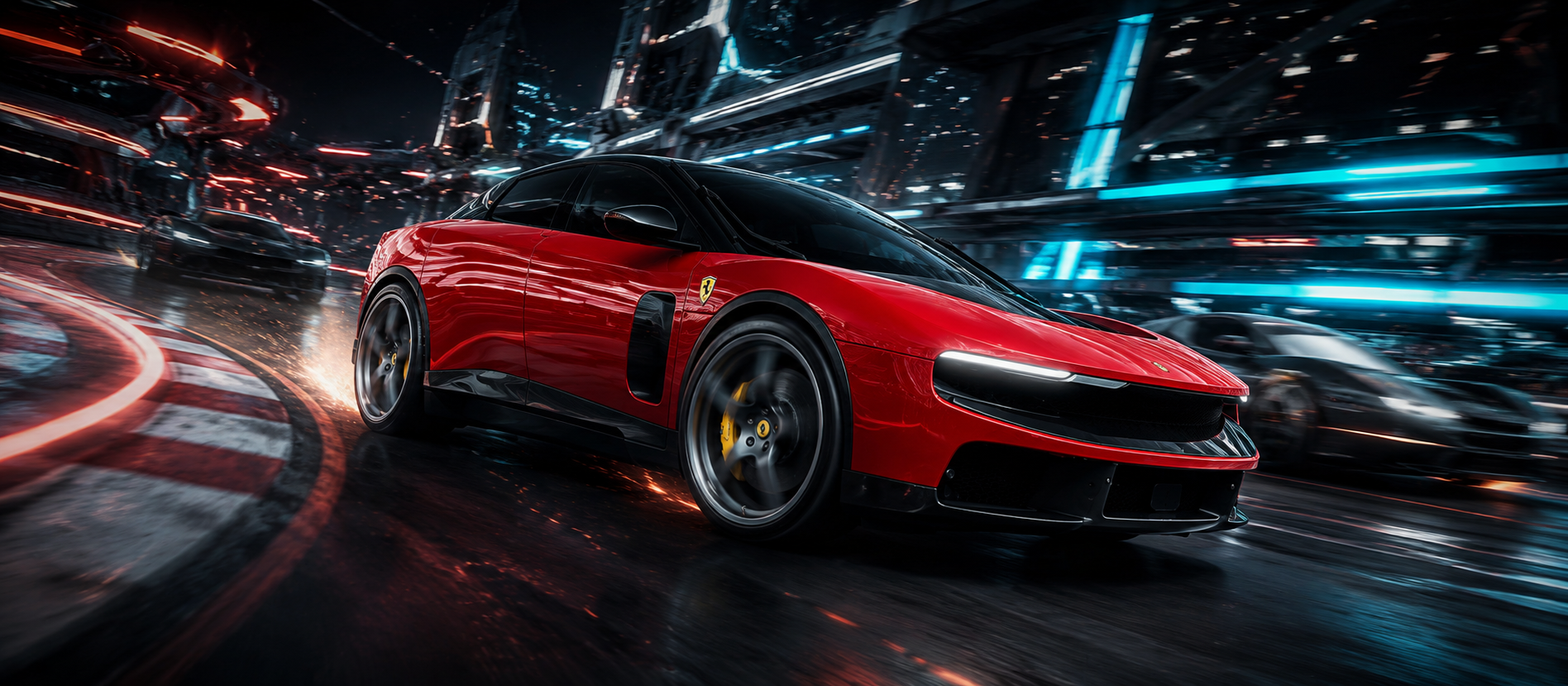
Ferrari’s first EV, the Luce, has arrived with Jony Ive design input, polarized reactions, and high expectations around RACE stock.
Ferrari stock: key questions
What is the Ferrari Luce?
The Ferrari Luce is Ferrari’s first fully electric vehicle. It is a high-end EV positioned as a halo model rather than a mass-market product.
When was the Ferrari Luce revealed?
Ferrari unveiled the Luce in Rome on May 25, 2026, after earlier previews of its design and technology.
How have analysts rated Ferrari stock?
Recent third-party consensus data generally shows Ferrari stock around Moderate Buy or Outperform, with most analysts positive and a smaller number staying neutral.
When are Ferrari’s next earnings?
Ferrari’s next scheduled results are Q2 2026 earnings on July 30, 2026, according to the company’s official financial calendar.
Could the Luce move Ferrari stock?
Yes, but probably through fundamentals rather than launch-day hype. Investors will care most about orders, margins, customer reception, and whether the EV expands Ferrari’s buyer base without hurting its core models.
Is this financial advice?
No. This article is for information only and is not investment advice. Ferrari stock can be volatile, analyst targets change, and investors should do their own research based on risk tolerance and financial objectives.