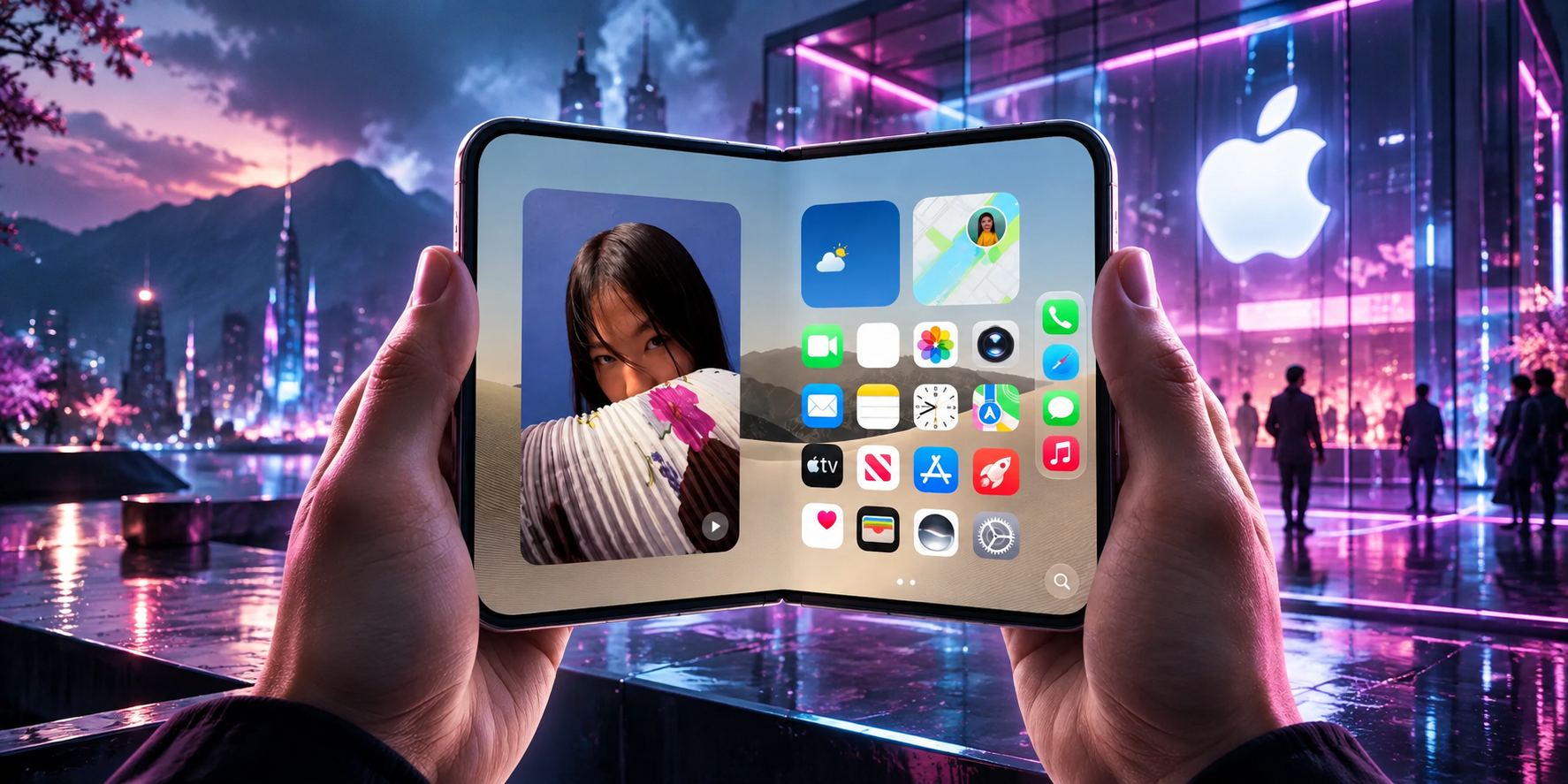
Apple has finally entered the foldable-phone market. The iPhone Duo, Apple’s first foldable iPhone, starts at $1,999 and is scheduled to reach stores on October 23.
That alone makes the Duo one of Apple’s most consequential iPhone experiments in years. But the important part is not simply that Apple has made a phone that folds. Foldable smartphones are already an established category, with manufacturers including Samsung and Google having spent years refining the format.
Apple is therefore arriving as a late entrant, not a category creator. The more interesting question is why Apple believes the foldable format is ready for the iPhone now — and whether the $1,999 Duo is supposed to become the future of the smartphone or remain an expensive technological showcase.
The wider launch also matters. Apple introduced the iPhone 18 Pro, AirPods 5 and Apple Watch Series 12 at the same event, while putting new AI capabilities and its A20 Pro chip into the broader story of where its hardware is heading. The Duo is not appearing in isolation. It is part of an increasingly ambitious attempt to redefine what premium Apple hardware looks like.
Table of contents
- Apple enters a market that already exists
- $1,999 changes the meaning of the launch
- The Duo does not replace the traditional iPhone — yet
- Why is Apple entering foldables now?
- The Duo fits into Apple’s bigger hardware and AI strategy
- Apple could change the foldable market without dominating it
- A first step toward a different kind of iPhone
- iPhone Duo: key questions
Apple enters a market that already exists
For Apple, launching a foldable smartphone in 2026 is fundamentally different from introducing the original iPhone into the mobile-phone market.
There is already a foldable ecosystem. Consumers understand the basic proposition, manufacturers have explored multiple designs, and years of commercial products have exposed both the strengths and weaknesses of folding displays.
Samsung’s Galaxy Z Fold line has pushed the book-style foldable toward increasingly mature hardware, while Google has incorporated foldable devices into its Pixel portfolio. Other manufacturers have experimented with different dimensions, hinge systems and increasingly thin designs.
Apple does not need to explain what a foldable phone is. It needs to explain why an iPhone should fold.
That distinction puts considerable pressure on the Duo. Being an Apple product may generate attention, but the format itself is no longer novel enough to serve as the entire sales pitch.
The company has to demonstrate that folding materially improves the iPhone experience rather than simply giving Apple another premium form factor to sell.
$1,999 changes the meaning of the launch
The starting price may be the clearest indication of how Apple currently sees the iPhone Duo.
At $1,999, this is not positioned as an immediate replacement for the conventional iPhone. It sits in a different economic category from the mainstream smartphone purchase and asks buyers to pay a substantial premium for access to a new Apple form factor.
That makes the first Duo look less like the new default iPhone and more like a premium technology platform.
There is precedent for Apple introducing new product concepts at prices that restrict their initial audience. Early adopters absorb the cost, developers and users discover which experiences actually matter, manufacturing matures, and successful ideas can eventually spread into more accessible products.
The Duo could play a similar role.
Its first generation does not need to outsell conventional iPhones to matter. Apple can use it to test demand for larger folding displays, establish software conventions and determine whether people actually change how they use iOS when their phone can transform into a larger device.
The $1,999 price also gives Apple room to absorb the expensive engineering associated with folding displays, hinges and a more complex physical design without immediately forcing those costs across its entire smartphone lineup.
But premium pricing creates another problem: expectations rise with it.
At $1,999, buyers are not simply purchasing another flagship phone. Apple is asking them to spend laptop-level money on a device whose defining feature introduces additional mechanical complexity. The Duo therefore needs to justify its premium through usability, durability and software — not novelty alone.
The Duo does not replace the traditional iPhone — yet
The simultaneous introduction of the iPhone 18 Pro is significant.
Apple could have positioned the Duo as the obvious next stage of its flagship smartphone. Instead, the traditional Pro model remains part of the lineup.
That creates two premium paths.
The iPhone 18 Pro represents the mature version of the conventional smartphone: familiar shape, established interaction model and predictable upgrade cycle. The Duo represents the experimental branch, asking users to accept a different physical format in exchange for additional screen possibilities.
For the moment, those products can coexist.
That arrangement also limits Apple’s risk. Customers who want the latest flagship without adopting a folding device still have a conventional high-end iPhone, while the company can build a new category above or alongside it.
The long-term relationship between those branches will be much more interesting.
If foldable iPhones eventually become thinner, cheaper and more durable, the distinction between “Pro” and “foldable” could begin to disappear. Alternatively, Apple may discover that foldables work best as a permanent ultra-premium niche — closer to a specialist extension of the iPhone family than its inevitable successor.
The first Duo cannot answer that question. Its position in the lineup suggests Apple is not forcing the answer yet.
Why is Apple entering foldables now?
Apple’s late arrival naturally raises a question: what changed?
The company has watched competitors iterate through multiple generations of foldable hardware. During that time, the industry has worked on some of the format’s most obvious weaknesses: bulky designs, hinge durability, display creases, software adaptation and the compromises required to fit batteries and cameras into unusually constrained bodies.
Apple has historically been willing to enter established categories when it believes the underlying technology and user experience have reached a point where it can offer its own interpretation.
That does not guarantee that the Duo solves every problem associated with foldables. Until the hardware undergoes independent testing over time, claims about durability, display longevity and everyday practicality deserve caution.
But Apple entering now suggests the company believes the equation has shifted enough to make a foldable iPhone commercially and technically viable.
Software may be equally important.
A folding device only becomes meaningfully different from a large conventional smartphone if applications and interfaces take advantage of the extra display area. Multitasking, media, productivity, communication and AI interfaces all potentially benefit from a device that can move between compact and expanded modes.
The challenge is turning those possibilities into routines people actually use.
The Duo fits into Apple’s bigger hardware and AI strategy
The Duo was only one part of Apple’s hardware announcements. The company also introduced the iPhone 18 Pro, AirPods 5 and Apple Watch Series 12, while emphasizing new AI functionality and the A20 Pro chip for future iPhones.
That broader context matters because the next phase of smartphone competition is increasingly about the interaction between hardware, software and AI rather than isolated specifications.
AI assistants and generative interfaces can require more contextual information to be visible at once. A larger display potentially creates space for richer AI interactions alongside the application or content a user is already viewing.
A foldable device could therefore become useful for more than traditional split-screen multitasking. It could provide a canvas where AI tools operate alongside messages, documents, webpages, photos or other applications without constantly replacing what is already on screen.
Whether Apple can make that experience compelling is another matter. A larger screen does not automatically produce better AI, and folding hardware cannot compensate for software that fails to provide genuinely useful workflows.
Still, Apple discussing AI, silicon and new hardware at the same event points toward a broader strategy: the company increasingly controls every layer required to experiment with new computing interfaces.
The Duo gives it another physical format on which to do that.
Apple could change the foldable market without dominating it
Apple does not have to invent foldables to influence what happens next.
Its entry immediately changes the competitive environment because accessory makers, application developers and consumers now have another major ecosystem supporting the format.
Developers who previously viewed foldables primarily through Android suddenly have a reason to consider how their applications behave on an iPhone that changes screen size.
That could matter more than raw first-generation sales.
A successful platform transition often depends on the surrounding ecosystem treating a new format as something worth designing for. If the Duo persuades major iOS developers to rethink layouts and multitasking, the benefits could eventually extend beyond Apple’s own device.
Competitors also gain a new benchmark.
Samsung, Google and other foldable manufacturers have had years to develop their products without an Apple equivalent sitting directly across the aisle. The Duo introduces a new comparison point around software integration, hardware design, ecosystem features and — inevitably — price.
Apple, meanwhile, will face the opposite comparison. It can no longer treat foldables as a category occupied by other companies. Its hardware will now be judged against devices that have benefited from several generations of iteration.
Late entry cuts both ways.
A first step toward a different kind of iPhone
The temptation with a first-generation Apple product is to treat it as an immediate preview of the company’s entire future.
The iPhone Duo does not justify that conclusion yet.
At $1,999, its initial role appears much narrower: a premium device for buyers willing to pay heavily for a new form factor, and a platform through which Apple can begin developing its own answer to foldable computing.
That could eventually lead somewhere much larger.
If manufacturing costs decline, hinges and displays continue improving, developers embrace adaptive interfaces and consumers demonstrate that they value expandable screens, folding could gradually become less of a specialist feature and more of a standard option within the iPhone family.
There is also the possibility that it does not.
Foldables have existed long enough to show that technological feasibility does not automatically translate into universal consumer demand. Conventional smartphones remain extremely effective devices, and adding mechanical complexity has to produce benefits significant enough to outweigh the additional cost and potential compromises.
That is why the most important thing about the Duo is not that Apple finally made a foldable iPhone.
It is that Apple has decided the category is mature enough to put the iPhone name — and a $1,999 starting price — behind it.
The first generation will tell us less about whether foldables have arrived than about what Apple thinks they can become.
iPhone Duo: key questions
What is the iPhone Duo?
The iPhone Duo is Apple’s first foldable iPhone, introducing a folding form factor to the company’s smartphone lineup.
How much does the iPhone Duo cost?
The iPhone Duo starts at $1,999, positioning it at the ultra-premium end of Apple’s hardware portfolio.
When will the iPhone Duo be available?
Apple says the iPhone Duo is scheduled to reach stores on October 23.
Does the iPhone Duo replace the iPhone 18 Pro?
No. Apple introduced the iPhone 18 Pro alongside the Duo, indicating that the conventional flagship and foldable model will coexist initially.
Is Apple the first company to make a foldable smartphone?
No. Apple is entering an established category in which Samsung, Google and other manufacturers have already released multiple foldable devices.
Why is the $1,999 price important?
The price suggests Apple is initially positioning the Duo as a premium niche product and technology showcase rather than an immediate mass-market replacement for conventional iPhones.
Has Geek’n’Destroy tested the iPhone Duo?
No. This analysis is based on Apple’s announcement and does not represent a hands-on review or independent durability testing.