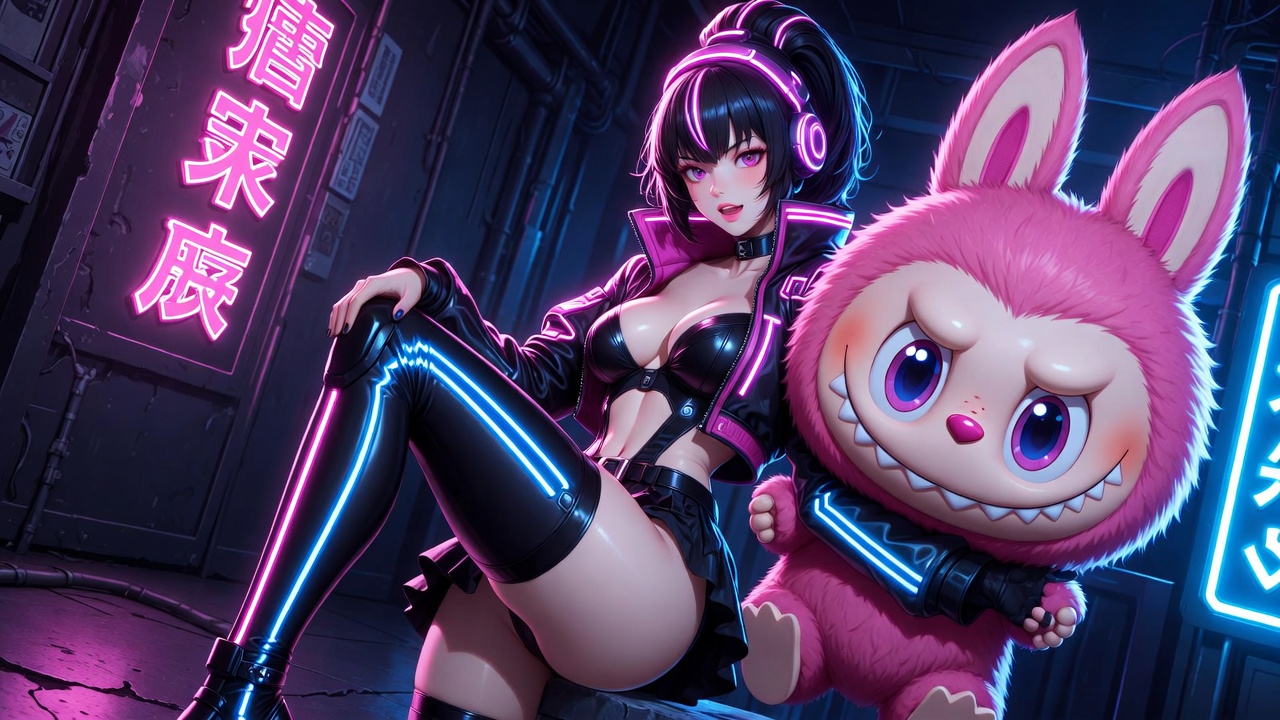
Pop Mart has become one of the strangest stock-market stories in consumer culture: a toy company that trades like a tech platform, monetizes like an IP studio, and scares investors like a meme-stock factory when one character gets too big.
The company behind Labubu, Molly, Skullpanda and a growing army of collectible creatures built its empire on the blind-box model: customers buy sealed boxes without knowing exactly which figure they will get. That simple mechanic turned designer toys into a repeat-purchase machine. But after a brutal correction from its 2025 highs, the market is asking a sharper question: is Pop Mart a durable pop culture platform, or just the latest hype cycle in vinyl form?
The answer is not clean. Pop Mart’s fundamentals remain powerful. Its concentration risk is also real. That tension is exactly why the stock has become so interesting.
Pop Mart’s blind-box machine
Pop Mart is not just selling toys. It is selling scarcity, discovery, character loyalty and the small dopamine hit of opening a mystery box.
The company controls a broad part of the value chain: artist discovery, intellectual property incubation, product design, retail distribution, roboshops, online sales and global expansion. That integrated model gives Pop Mart more control than a traditional toy distributor. It can launch characters, test demand, scale winners quickly and push them across physical stores, vending-style machines and e-commerce channels.
According to Pop Mart’s 2025 annual results filed through HKEX, revenue reached RMB 37.12 billion in 2025, up 184.7% year-on-year. The company also reported rapid growth across retail stores, roboshops and online channels, with overseas markets becoming a larger part of the story. Pop Mart annual results
That is the bull case in one sentence: Pop Mart has turned collectible character IP into a global consumer engine.
The Labubu problem investors cannot ignore
The bear case is just as direct: Labubu became too important.
The Monsters, the IP line most closely associated with Labubu, generated about 38% of Pop Mart’s 2025 revenue, according to reports following the company’s annual results. That is a massive contribution from one franchise, and it explains why investors reacted so aggressively when signs of cooling demand appeared.
Reuters reported that Pop Mart shares fell more than 20% after its 2025 earnings, despite revenue growth of 185%, as investors focused on slower fourth-quarter momentum and the durability of its top IPs. Reuters
That fear is rational. Collectibles can move brutally fast. A character can go from cult object to global obsession, then from global obsession to discount-bin nostalgia if supply, resale prices and social-media heat turn at the same time.
Labubu is still a powerful franchise. But the market is no longer pricing Pop Mart as if every viral monster automatically becomes Mickey Mouse.
A valuation reset after the sell-off
The correction changed the debate.
After trading like a near-perfect growth story, Pop Mart’s stock has suffered a sharp reset from its 2025 highs. Some market trackers and analyst aggregators now show a much more constructive setup, with consensus price targets around the HKD 250 range and a majority of analysts still rating the stock as a buy.
That does not make the stock “cheap” in a risk-free sense. It means the valuation now reflects more skepticism than it did during the Labubu mania.
The company has also used buybacks after the sell-off, a signal that management sees value in the stock at lower levels. Buybacks are not magic. They do not solve IP concentration. But they do matter when paired with strong cash generation and a business that is still expanding internationally.
For investors, the question is whether the sell-off has already priced in a reasonable amount of Labubu fatigue. If Pop Mart can prove that its next wave of characters has staying power, the market may start valuing the company less like a fad stock and more like a recurring IP platform.
The pipeline beyond one viral monster
Pop Mart knows the Labubu issue. The company’s next challenge is to show that its pipeline is not just decorative.
Newer IPs such as Twinkle Twinkle are part of that diversification story, while established names like Skullpanda, Crybaby and Molly still carry loyal communities and resale-market visibility. The point is not that every character needs to become Labubu. That would be unrealistic. The healthier model is a portfolio where several franchises can rotate into growth, limited editions, collaborations and international demand.
This is where Pop Mart’s structure helps. Because the company owns or manages key parts of its IP pipeline, it can keep refreshing products without depending entirely on external licenses. That gives it more strategic room than a retailer simply chasing whatever toy trend is hot this quarter.
Still, execution matters. The company has to prove that it can repeatedly build durable characters, not just manufacture scarcity around one viral hit.
From toy seller to pop culture platform
The more ambitious version of Pop Mart is not a toy company. It is a pop culture platform.
That means stores are not just distribution points. They are fan spaces. Roboshops are not just vending machines. They are discovery machines. Characters are not just figurines. They can become plush toys, accessories, games, films, theme park attractions and licensed media properties.
Pop Mart has already been expanding beyond the shelf, including theme park experiences and media projects. The company’s long-term upside depends on whether it can turn character demand into a broader entertainment ecosystem without losing the design-led weirdness that made fans care in the first place.
That is a delicate balance. Over-commercialize the characters, and they lose their edge. Under-invest in the ecosystem, and Pop Mart remains vulnerable to the next toy-market trend.
The investment takeaway
Pop Mart is a high-quality business with a high-volatility narrative.
The positives are obvious: explosive revenue growth, global expansion, a powerful direct-to-consumer model, strong IP economics and a more attractive valuation after the correction. Analyst sentiment remains broadly positive, and management’s buybacks suggest confidence.
The risks are just as obvious: Labubu concentration, possible hype-cycle exhaustion, resale-market weakness, rising competition and the difficulty of creating repeat hits in culture-driven consumer markets.
That makes Pop Mart less of a simple “toy stock” and more of a test case for China’s next generation of global IP companies. If the company can diversify beyond Labubu while keeping its collector engine alive, the recent sell-off may look like a strategic entry point in hindsight. If it cannot, the market will treat the 2025 boom as a one-character miracle.
Either way, Pop Mart is no longer just selling blind boxes. It is asking investors to open one.
Pop Mart stock: key questions
What does Pop Mart do?
Pop Mart develops, markets and sells collectible designer toys, especially through blind boxes. It also manages character IP, retail stores, roboshops, e-commerce channels and international distribution.
Why did Pop Mart stock fall after strong results?
The stock fell because investors focused on concentration risk around Labubu and The Monsters IP, as well as concerns about whether the company can maintain rapid growth after a huge 2025 surge.
How important is Labubu to Pop Mart?
Labubu is extremely important. The Monsters IP line, closely associated with Labubu, accounted for roughly 38% of Pop Mart’s 2025 revenue, making it a major growth driver and a major risk factor.
Is Pop Mart trying to diversify beyond Labubu?
Yes. Pop Mart is pushing other IPs, including newer characters and established lines such as Skullpanda, Crybaby and Molly, while also expanding into broader entertainment, retail experiences and licensing.
Is Pop Mart stock financial advice?
No. This article is for information and analysis only. Pop Mart remains a volatile consumer and entertainment stock, and any investment decision should match your own research, risk tolerance and long-term strategy.