
SpaceX has not just entered the IPO conversation. It has dragged the whole market into hyperspace.
The reported SpaceX listing, potentially targeting a valuation around $1.75 trillion, is already being treated as more than a financial event. It is a cultural flare in the sky: Elon Musk, reusable rockets, Starlink, Mars, orbital data centres, AI infrastructure, retail investor access, and the possibility of the largest IPO spectacle markets have ever seen. According to Reuters, SpaceX could be added quickly to major indexes after listing under new FTSE Russell rules, while recent reports have framed the deal as a possible record-breaking IPO with huge institutional and retail demand.
But here is the catch: most investors cannot buy SpaceX yet. So the market does what markets always do when the Death Star is still under construction. It starts buying everything that looks even remotely connected to the exhaust trail.
The Death Star has filed paperwork
An IPO prospectus is usually dry enough to make a compliance lawyer reach for coffee. SpaceX is different. A SpaceX filing reads like a capital markets document crash-landed into a sci-fi franchise.
The reported numbers are galactic. A $1.75 trillion target valuation would place SpaceX in the same mental bucket as the world’s most valuable public companies before ordinary investors even get a clean shot at the stock. Reports have also pointed to a possible $75 billion raise, a massive addressable market narrative, and a company story that stretches from launch services to satellites, Starlink broadband, lunar infrastructure, Mars ambitions, and potentially orbital data centres.
That last phrase matters. Orbital data centres sound like something from The Expanse, but they are now part of the investor imagination around SpaceX. TechCrunch has reported that orbital data centres may become a key part of the IPO narrative, while other reports have highlighted SpaceX’s claim of a giant total addressable market tied heavily to AI infrastructure and enterprise applications. The story is no longer just “rockets go up.” It is “compute, connectivity, launch dominance, and space infrastructure might become one vertically integrated machine.”
That is why this IPO feels less like a listing and more like a franchise release. Wall Street is not just pricing cash flows. It is trying to price the Millennium Falcon, the hyperdrive, the fuel depot, and the merch rights.
The proxy stock gold rush
When investors cannot buy the thing they actually want, they buy the nearest shadow of it.
That is the proxy stock dynamic. Before SpaceX becomes publicly tradable, investors may rush into listed companies that look connected to the theme: satellite manufacturers, launch suppliers, defence contractors, rocket-component makers, space communications firms, geospatial-data companies, aerospace rivals, and thematic space ETFs.
Some of those links will be real. Others will be cosplay with a ticker symbol.
A supplier with meaningful revenue exposure to SpaceX is not the same as a company that once mentioned “space economy” in an investor deck. A satellite communications company is not automatically a Starlink winner. A defence contractor with a space division is not necessarily a pure-play on commercial orbital infrastructure. And an ETF with “space” in the name may contain a mix of aerospace, defence, telecom, industrials, and companies whose connection to Mars is mostly vibes.
Still, proxy trades can move fast because they do not need perfect logic. They need a story, a chart, and enough people who fear missing the first jump.
This is where the market turns into Star Wars. SpaceX is the main saga. Proxy stocks are the spin-offs, prequels, animated series, toy lines, and suspiciously priced collector helmets. Some will have genuine value. Some will be Jar Jar in a flight suit.
Picks, shovels, and rocket fuel
The logic behind the frenzy is not irrational by itself. In every gold rush, the cleanest money is often made by the people selling picks and shovels.
If SpaceX expands launch capacity, Starlink, satellite networks, or orbital infrastructure, it may need chips, antennas, ground stations, solar arrays, launch materials, precision manufacturing, software, robotics, insurance, logistics, and regulatory support. That means the ecosystem around SpaceX could matter, even for investors who never touch SpaceX shares directly.
The problem is that “could matter” is not the same as “is cheap,” “has pricing power,” or “will actually benefit.”
A supplier can be strategically important but financially squeezed. A partner can win prestige without winning margin. A rival can attract attention while losing market share. A thematic ETF can offer broad exposure but dilute the actual SpaceX-adjacent signal. Even a legitimate picks-and-shovels stock can become dangerous if investors reprice it overnight as if every future rocket launch flows straight into its income statement.
This is the Kerbal Space Program lesson of capital markets: reaching orbit is not just about adding more boosters. Sometimes more boosters simply make the explosion more expensive.
The best proxy trades require a boring question beneath the exciting theme: how much revenue does this company actually earn from the thing everyone is talking about?
Retail gets a seat — maybe
The reported retail angle is another reason this IPO has become so explosive. Some reports have suggested SpaceX could allocate up to 30% of shares to retail investors, a far larger slice than typical blockbuster IPOs.
If that happens, it changes the psychology of the deal.
Retail investors are usually forced to watch marquee IPOs from behind the glass while institutions get the early allocation. By the time the stock opens, the easy money may already be gone, the float may be tight, and the first candle can look like a lightsaber duel. A meaningful retail allocation would turn the SpaceX listing into something closer to a mass-participation event.
That sounds democratic. It also sounds dangerous.
When retail investors believe they might get a seat on the Falcon, demand can build before the listing itself. People start positioning around the event, buying proxies, chasing ETFs, and convincing themselves that SpaceX is not just another IPO but a once-in-a-generation access point to the future of civilization.
Maybe it is. Maybe it is not. Markets do not reward mythology on a fixed schedule.
The hard part is that SpaceX sits at the intersection of several powerful investor narratives: Musk premium, AI infrastructure, space economy, defence relevance, satellite internet, index inclusion, and retail democratization. Each narrative can attract a different crowd. Together, they create a gravitational field strong enough to bend common sense.
So what?
The SpaceX IPO may become a genuine market landmark. It may also become a stress test for how investors behave when narrative arrives before clean numbers.
The smart approach is not to pretend the hype does not matter. Hype moves markets. The smart approach is to map it.
First, map the value chain. SpaceX is not one business line. It touches launch, satellites, broadband, manufacturing, software, defence, logistics, and possibly data infrastructure. A company exposed to one layer of that chain may have a very different risk profile from another.
Second, avoid chasing vertical moves. If a proxy stock jumps because traders suddenly decide it is “the SpaceX supplier,” the easy part of the trade may already be gone. Momentum can be real, but buying a straight-up chart because of IPO fever is how portfolios get vaporized.
Third, check revenue exposure. The key question is not whether a company is thematically related to space. The key question is whether the theme is large enough to move its sales, margins, and cash flow. A $50 million contract does not justify adding $5 billion in market cap unless there is a credible path to much more.
Fourth, separate space infrastructure from space cosplay. Real infrastructure has customers, contracts, technical barriers, capacity constraints, and measurable demand. Space cosplay has glossy decks, vague TAM slides, and language that sounds like it was generated by a protocol droid trained on venture capital podcasts.
Finally, remember that SpaceX itself may be extraordinary and still be difficult to buy well. A great company can be a poor stock at the wrong price. A revolutionary business can still face execution risk, valuation risk, regulatory risk, capital intensity, and the brutal math of expectations.
The SpaceX IPO fever is turning markets into Star Wars because everyone wants to be early to the rebellion. But in markets, the Force is not enough. You still need a map, a risk budget, and the discipline not to buy every glowing object that looks like a lightsaber.
For further reading, see Reuters’ reporting on SpaceX’s potential index inclusion and IPO setup here, and TechCrunch’s coverage of the orbital data centre narrative here.
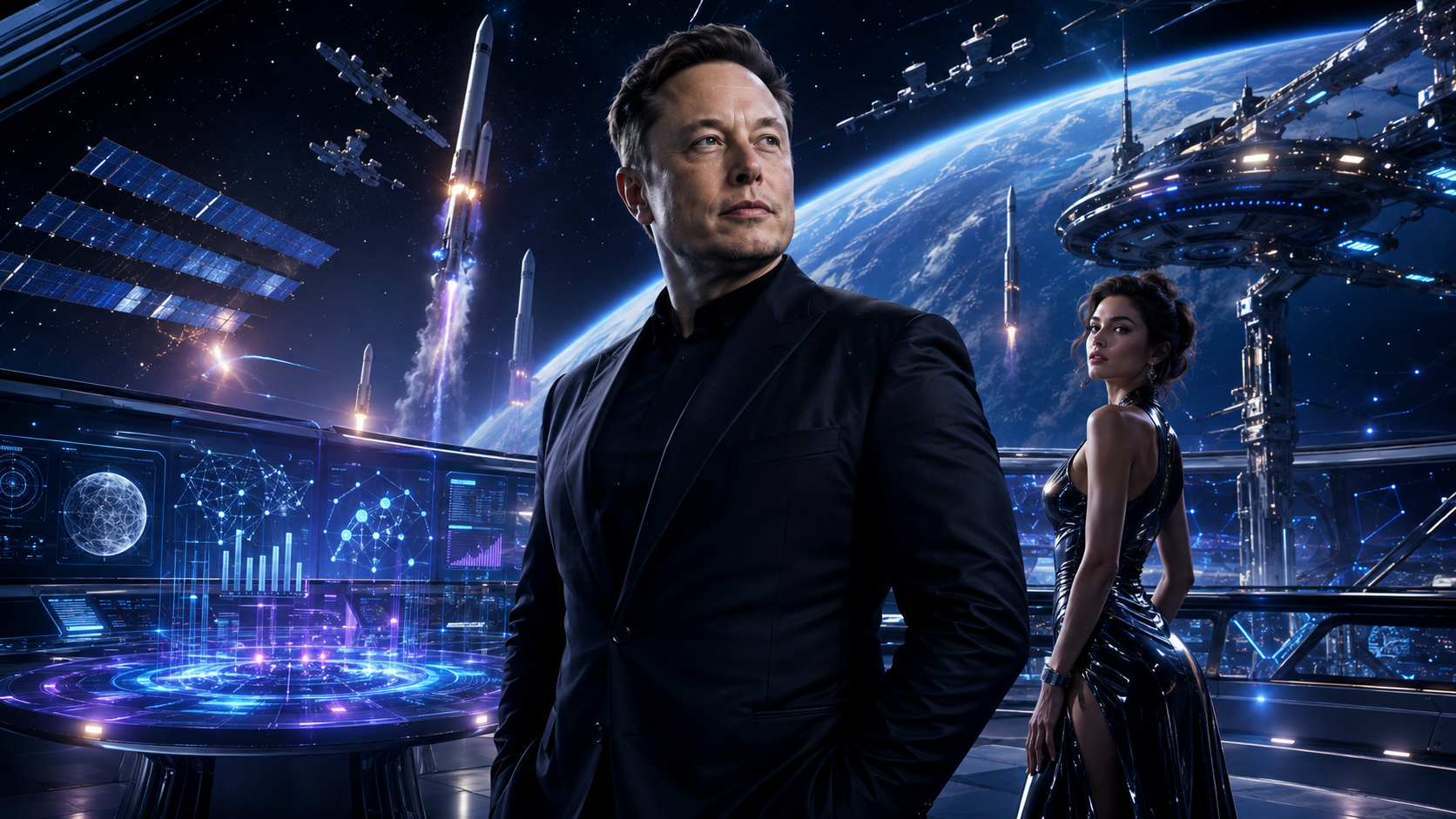
SpaceX’s IPO Could Be the Biggest Wall Street Launch Ever
SpaceX IPO: key questions
Why would a SpaceX IPO affect other stocks?
Because investors often buy related public companies before they can buy the main IPO. Suppliers, partners, rivals, defence names, satellite companies, and space ETFs can all become proxy trades.
What is a proxy stock?
A proxy stock is a publicly traded company investors use as indirect exposure to a theme, event, or private company. In this case, it means buying space-related names before SpaceX itself is available.
Is the reported SpaceX valuation confirmed?
Reports have pointed to a possible $1.75 trillion valuation, but IPO terms can change before pricing. Investors should treat headline numbers as provisional until final offering documents and pricing are confirmed.
Why does the retail allocation matter?
If SpaceX allocates a large share of the IPO to retail investors, it could create unusual demand from individual traders and change the psychology around the listing.
Are space ETFs a safer way to play the theme?
They can reduce single-stock risk, but they may also include companies with loose or diluted exposure to the space economy. Investors still need to check holdings, fees, liquidity, and concentration.
Is this financial advice?
No. This article is for information and analysis only. IPOs, space stocks, ETFs, and speculative proxy trades can be highly volatile, so investors should do their own research or speak with a qualified financial adviser.