Old books were supposed to be the sleepy corner of the internet economy. Dusty essays, regional histories, wine manuals, conference proceedings, civil war diaries — the kind of titles that sit for years in second-hand bookshops waiting for one very specific buyer.
Now, according to reports from taz, elDiario and Swiss broadcaster RTS, those forgotten shelves may have become a new frontier in the AI data race.
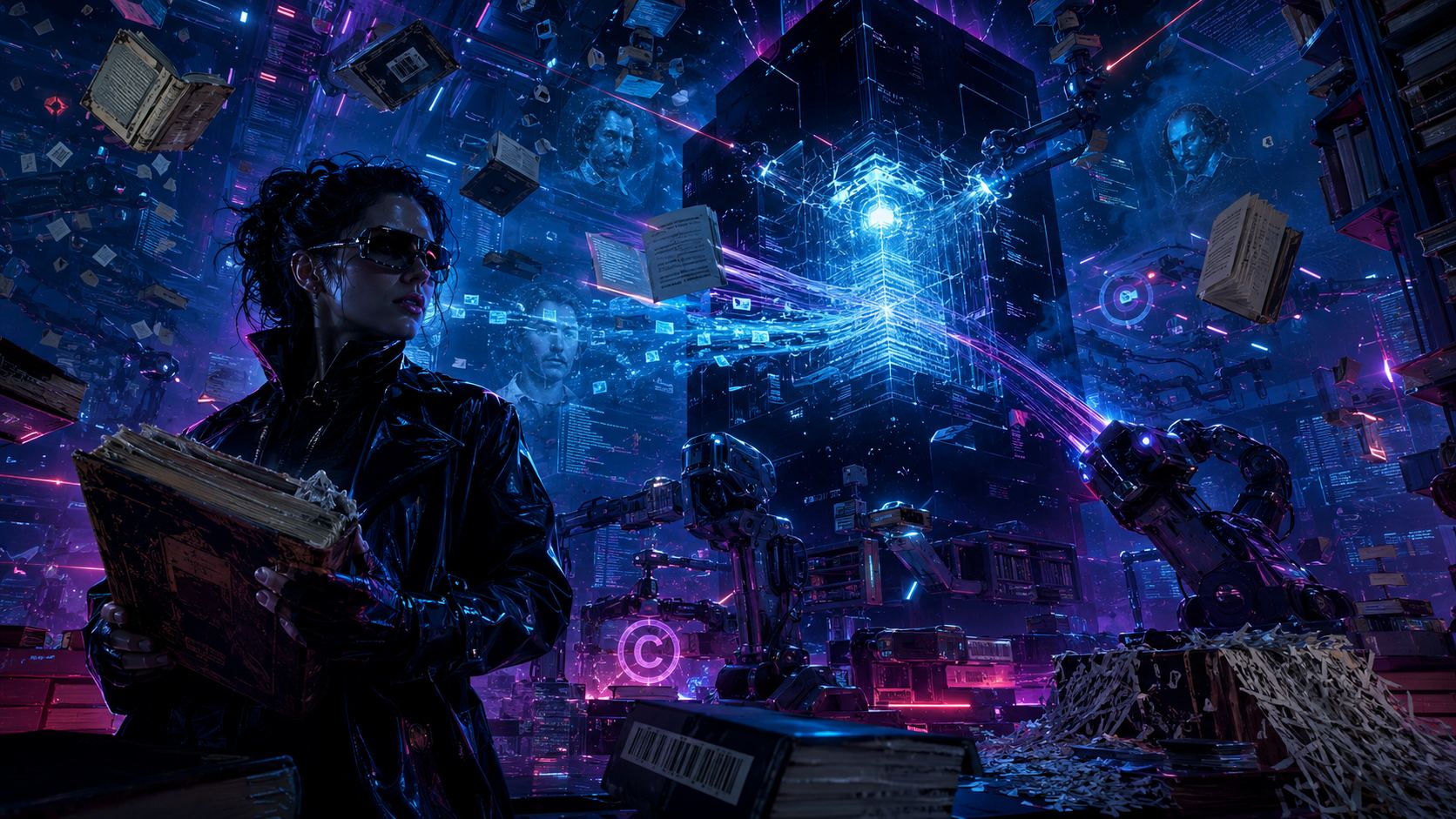
The pattern is strange: mass orders, often placed automatically, targeting obscure non-fiction books with ISBNs. The fear among booksellers is sharper still: that some of these volumes are being bought, scanned, and destroyed to feed large language models.
- The mystery of the night-time book orders
- Why Zoom Books is under scrutiny
- The AI data wall problem
- Why destructive scanning matters legally
- A cultural heritage problem, not just a copyright fight
- AI book scanning: key questions
The mystery of the night-time book orders
Booksellers in Germany, Spain, Bulgaria, New Zealand and the United States have reported unusual bulk orders for old books, sometimes arriving between 3 a.m. and 5 a.m. The orders are not for obvious collectibles or bestsellers. They often target non-fiction works published after 1970, obscure local histories, technical manuals, academic proceedings and low-demand titles that have been sitting unsold for years.
That detail matters. For AI companies, obscure books are not useless. They are exactly the opposite: long-form, human-written, structured text that may not already be overrepresented online.
Spanish bookseller Marçal Font told elDiario that the orders looked automated, with several purchases from the same buyer arriving only a minute apart. To a shop owner, that is a sale. To a cultural archivist, it looks like extraction.
Why Zoom Books is under scrutiny
The Canadian company Zoom Books has been named in several reports as a buyer behind some of these orders. On its own website, Zoom Books presents itself as a book recycling and resale company that keeps books out of landfill, resells usable copies and recycles the rest.
The company has denied allegations that it scans and destroys books for AI training. That denial is important. At this stage, the most serious claims around Zoom Books remain allegations, not proven facts.
Still, booksellers are uneasy because the buying pattern feels algorithmic and unusually specific. Zoom Books says it targets dusty, unsold non-fiction books with ISBNs. But when thousands of old European books are bought by a North American recycler, the obvious question becomes: who wants them, and why?
The AI data wall problem
The suspicion lands at a convenient moment for the AI industry. Large language models need vast amounts of text. The best material is not random sludge from the web. It is clean, coherent, edited, human-written text.
That supply is under pressure. Researchers at Epoch AI have estimated that the stock of useful public human-generated text could be heavily consumed between 2026 and 2032 if current trends continue.
That is the so-called data wall. Once the easy web is scraped, licensed or locked behind restrictions, AI labs need new sources. Physical books suddenly look less like relics and more like raw material.
Why destructive scanning matters legally
The legal logic is especially controversial in the United States. In the Anthropic copyright case, a federal court found that training on lawfully acquired books could qualify as fair use, while the company’s use of pirated book libraries created separate legal problems. The ruling is available through the court order published by Copyright Alliance.
The Washington Post later reported that Anthropic had pursued a project involving the destructive scanning of physical books. In destructive scanning, a book’s spine is cut so pages can be scanned quickly, after which the physical copy may be recycled.
This is the weird new bargain: buy the book, digitize the text, destroy the object, and argue that no unauthorized copy is circulating in the traditional sense. Legally clever? Maybe. Culturally grim? Absolutely.
A cultural heritage problem, not just a copyright fight
The books at stake are not always rare in the luxury auction sense. That is exactly why the issue is easy to dismiss. But cultural memory is not made only of first editions and famous authors.
Local histories, technical reports, minority-language essays, old conference proceedings and regional memoirs are part of the long tail of printed knowledge. Once they are absorbed into private AI datasets and physically destroyed, the public may lose access to the originals forever.
That is why booksellers are calling the phenomenon a form of literary pillage. The fear is not only that AI companies are reading books without permission. It is that the book itself becomes disposable infrastructure — a paper body sacrificed so a model can autocomplete the future.
AI book scanning: key questions
Are AI companies really buying and destroying old books?
Anthropic’s destructive scanning of physical books has been reported through legal disclosures. The broader claims involving current bulk orders from second-hand booksellers remain disputed and, in Zoom Books’ case, denied.
Why would AI companies want old physical books?
Old books can contain high-quality human-written text that is not easily available online, making them valuable for training or improving AI systems.
Is destructive book scanning legal?
It depends on the jurisdiction and the details. In the United States, fair use may protect some AI training on lawfully acquired books, but piracy and unauthorized copying remain legally risky.
Why are booksellers worried?
They fear that obscure printed works could disappear from public circulation, be converted into private datasets, and lose their physical and historical value.
Is this only about copyright?
No. It is also about cultural preservation, access to knowledge, and who gets to control the long tail of human writing in the AI era.