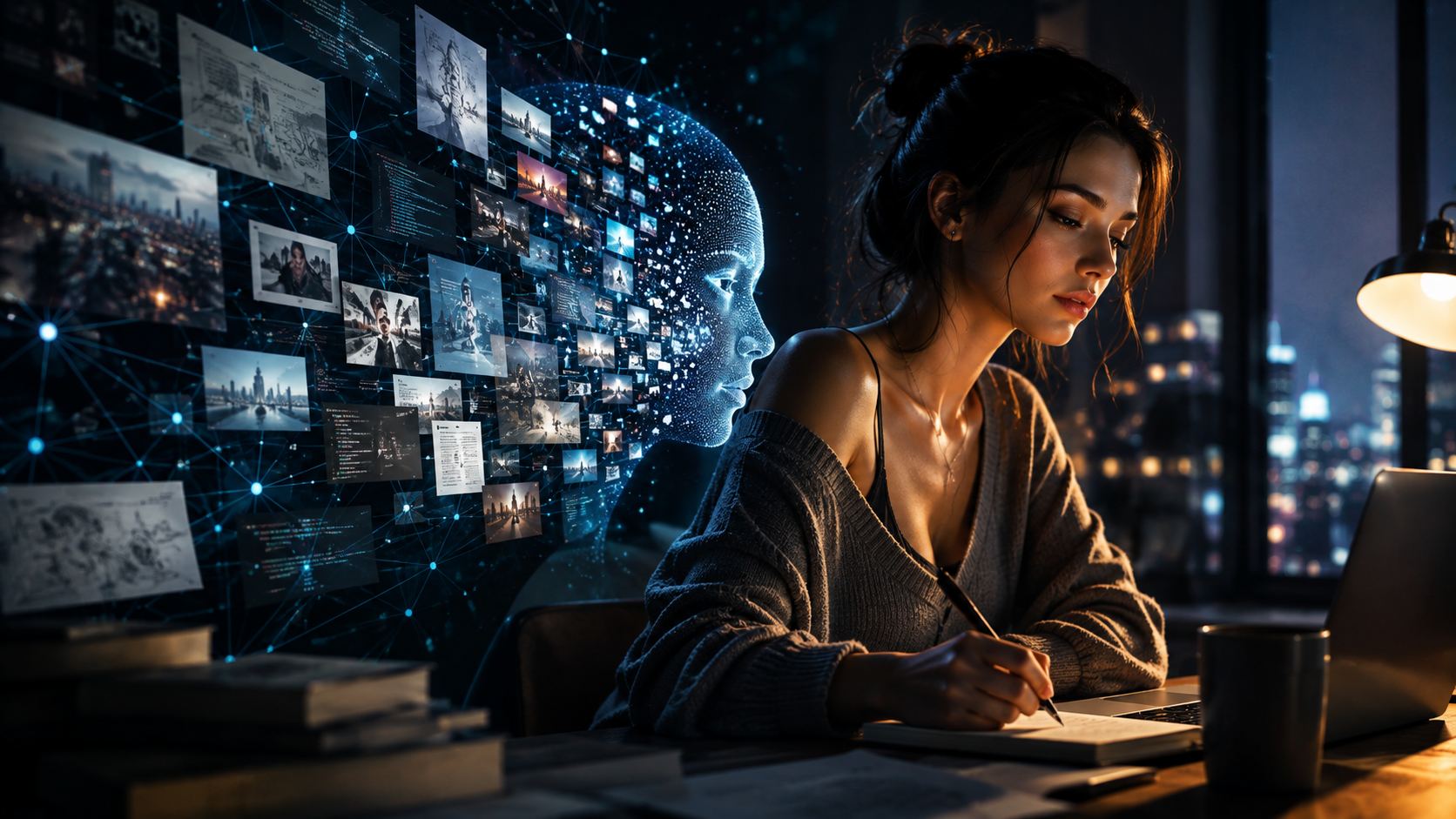
The generative AI boom did not begin with a blank page. It was built on decades of human work: articles, photographs, videos, software code, forum discussions, product reviews, personal stories and countless other fragments of digital culture. Together, that material became AI training data. Most of it was not created for machine learning.
Developers answered questions to help other programmers. Patients discussed their experiences to support strangers. Artists published portfolios to reach audiences. Volunteers maintained wikis, moderated communities and documented obscure corners of the internet. Their collective knowledge was then collected at industrial scale and transformed into the raw material behind commercial AI systems.
Now the people, publishers and platforms behind that knowledge are pushing back. Reddit has sued Anthropic and Perplexity over alleged unauthorized scraping. Getty Images continues its legal battle with Stability AI. Creators have brought claims against technology companies over the alleged use of videos, images and other protected works.
The lawsuits are important, but they point toward a much bigger question: who owns AI training data, and who should control the value generated by the internet’s collective knowledge? Table of contents
- How AI training data became digital gold
- The internet never consented to become a dataset
- Reddit’s case against Anthropic
- Why Reddit also sued Perplexity
- Platforms do not own everything users publish
- Creators face a massive enforcement gap
- How Europe regulates AI training data
- The case for collective digital rights
- Could data cooperatives change the balance?
- AI training data could reshape the open internet
- AI training data: key questions
How AI training data became digital gold
The first commercial era of the internet was built around attention. Platforms attracted users, measured their behavior and sold advertisers access to carefully segmented audiences. Generative AI introduced a second layer of extraction. Human expression became valuable not only because it attracted clicks, but because it could be collected and used to train systems capable of producing text, images, audio, video and software.
That transformation turned AI training data into one of the technology industry’s most strategically important resources. Large language models require enormous and varied datasets. They need examples of conversation, grammar, reasoning, factual explanation, storytelling, programming and specialist knowledge. Image generators need visual works connected to descriptions, concepts and styles. Coding assistants depend on repositories, documentation and problem-solving discussions. The open web offered all of that at unprecedented scale.
From an engineering perspective, it looked like an irresistible resource. From the perspective of internet users, the process was much more troubling. Material created for one purpose was silently repurposed for another. A public discussion became a dataset entry. A tutorial became a commercial input. A personal story became part of a model whose developer might never clearly disclose how the information was collected. The AI industry did not create the internet’s knowledge commons. It discovered that the commons could be industrialized.
The internet never consented to become a dataset
The fight over AI training data is often presented as a copyright dispute. Copyright matters, but it does not fully capture the problem. The deeper issue is consent. Most people understood that publicly available posts could be read by other users, indexed by search engines, linked from other websites or quoted within legal limits. Few expected years of their writing, artwork or conversations to be absorbed into commercial systems that might eventually compete with them.
Public access is not the same as unrestricted permission. A photograph displayed on a website does not automatically lose copyright protection. A forum post visible without an account does not necessarily become free material for every future commercial use. A creator who publishes work online does not automatically abandon all control over that work. AI developers have argued that model training can be transformative, that models learn statistical relationships rather than simply functioning as conventional databases, and that broad access to online information supports innovation and competition.
Creators and rights holders respond that large-scale copying still takes place during model development, that AI products can compete directly with original work and that public availability has too often been treated as a substitute for authorization. Courts are still deciding where the legal boundaries lie. The social consequences, however, are already visible. Publishers are restricting automated access. Platforms are tightening their application programming interfaces. Creators are adopting technical and contractual tools intended to block scraping. Valuable discussions are increasingly moving into private communities. The result is a dangerous paradox: AI systems built from the open internet could ultimately make the internet less open.
Reddit’s case against Anthropic
Reddit has become one of the most important battlegrounds in the debate over AI training data. The platform contains years of natural conversation, technical troubleshooting, cultural commentary, product recommendations and personal experience. Unlike carefully polished corporate pages, Reddit discussions show how people explain ideas, challenge one another, make mistakes and revise their conclusions. That makes the platform particularly valuable for companies building conversational AI systems.
On June 4, 2025, Reddit filed a lawsuit against Anthropic in California state court. Reddit alleged that Anthropic accessed and commercially exploited Reddit content without an authorized agreement, despite the platform’s restrictions on automated collection. The complaint included claims involving breach of contract, unjust enrichment, trespass to chattels, tortious interference and unfair competition. It was not framed primarily as a conventional copyright infringement case.
Reddit also alleged that Anthropic used Reddit material to improve Claude while refusing to enter into a licensing arrangement comparable to deals Reddit had reached with other AI companies. Anthropic has disputed Reddit’s allegations and has maintained that its training practices are lawful. The case remains part of a wider legal struggle over whether platform rules can restrict the collection and reuse of publicly accessible material. The full allegations are detailed in Reddit’s official complaint against Anthropic.
Why Reddit also sued Perplexity
Reddit expanded its legal campaign in October 2025 by suing Perplexity and several companies accused of supplying scraped Reddit data. The lawsuit alleged that Perplexity benefited from content collected despite Reddit’s contractual restrictions and technical protections. Reddit brought claims including violations of the Digital Millennium Copyright Act, unfair competition, unjust enrichment and civil conspiracy.
The DMCA was originally associated mainly with copyrighted media and software protection. In the AI scraping conflict, its anti-circumvention provisions have become another possible weapon against companies accused of bypassing technological barriers. On July 31, 2026, a federal judge in Manhattan allowed central parts of Reddit’s lawsuit to proceed while dismissing some secondary claims. The ruling did not determine that Perplexity was liable. It meant that Reddit had pleaded sufficient allegations for several claims to continue through the litigation process.
Perplexity has defended its practices and argued that open access to public internet information is essential. The company has also rejected portrayals of its technology as simple content theft. The dispute highlights the increasingly commercial nature of online access. Reddit licenses data to selected companies while attempting to prevent others from collecting the same material without permission. That model may be understandable from a platform perspective, but it creates another question: when Reddit sells access to discussions, how much of that value belongs to the users who created them? Reddit provides the infrastructure, distribution and moderation systems. Its communities provide the conversations that make the archive valuable. Both sides contribute, yet only one currently negotiates the licensing deal.
Platforms do not own everything users publish
A platform that hosts user-generated content does not automatically own every post, image or creative work published through its service. The 2024 case between X Corp. and Bright Data demonstrated that limitation. X accused Bright Data of improperly scraping and selling information from the social network. A federal judge dismissed X’s complaint, concluding that the company had not plausibly established its claims. The court also rejected the idea that X could use its platform agreement to obtain rights resembling exclusive copyright control over material created by users.
That distinction matters. Users generally retain ownership of original content, although they grant platforms certain licenses under the terms accepted when using a service. In theory, that protects creators. In practice, it creates a serious imbalance. A large platform can monitor automated traffic, hire experienced legal teams and negotiate licensing agreements worth millions of dollars. An individual photographer, illustrator, programmer or forum contributor usually cannot. A person may own the copyright in a work while lacking the evidence, money and time required to enforce that right against a global AI company. Ownership without realistic enforcement offers only limited protection.
Creators face a massive enforcement gap
The economics of litigation strongly favor large organizations. A creator challenging the use of protected work as AI training data may need to identify which material was collected, prove that the defendant had access to it, investigate how a model was trained and connect that process to a legally recognized injury. That is difficult when AI companies publish only broad descriptions of their datasets.
Even when a creator strongly suspects that a work was used, proving its inclusion can be expensive and technically complex. Models do not always reproduce training examples in an obvious or consistent way. Dataset records may be unavailable. Developers may argue that disclosure would expose trade secrets. Class-action lawsuits can combine similar claims, but they introduce additional obstacles. Different creators may own different rights. Some works are formally registered, while others are not. Certain materials may have been licensed through third parties. Some claims may be affected by jurisdiction, contractual language or statutory exceptions.
AI companies can also raise fair-use defenses, challenge whether plaintiffs have standing or argue that generated outputs are not substantially similar to the original works. This creates an enforcement gap between rights that exist in law and rights that ordinary people can exercise in reality. Litigation may establish important boundaries, but courts are not designed to create a complete governance system for billions of online contributions. A broader solution may require clearer regulation, standardized licensing and new forms of collective representation.
How Europe regulates AI training data
The European Union has taken a more coordinated approach to AI training data than the United States. The EU AI Act entered into force on August 1, 2024. Its provisions have applied in stages, with obligations for providers of general-purpose AI models beginning on August 2, 2025. Those providers must maintain technical documentation, implement a policy for complying with European copyright law and publish a sufficiently detailed summary of the content used to train their models.
The European Commission has introduced a standardized template intended to make those summaries more consistent and useful. These rules do not require AI companies to publish a complete list of every file, page or work used during training. They also do not automatically require an individual license for every item in a dataset. Instead, they operate alongside the European Union’s existing text-and-data-mining framework. Under EU copyright rules, commercial text and data mining may be permitted when rights holders have not expressly reserved their works against that use. Developers are therefore expected to identify and respect valid rights reservations.
The General Data Protection Regulation adds another layer when datasets contain personal information. Depending on the circumstances, principles such as lawful processing, transparency, data minimization and purpose limitation may apply. Europe’s framework is not a complete solution. Public training summaries may remain too broad for creators to identify specific works. Enforcement may differ between national authorities. Trade-secret protections can limit disclosure. Smaller developers may face significant compliance costs. Even so, the regulatory direction is important.
In Europe, collecting AI training data is increasingly treated as a legal and governance responsibility rather than a purely technical operation. More information is available through the European Commission’s official AI Act overview and its training-data summary template announcement.
The case for collective digital rights
Copyright law is primarily designed around identifiable works and individual rights holders. Online communities create value in a more complicated way. A useful forum is not simply a collection of independent posts. One person asks a question. Another proposes an answer. A third corrects a mistake. Moderators remove spam and abusive content. Future contributors update the discussion when circumstances change.
The value emerges from the interaction. The same principle applies to wikis. No single edit contains the full value of an article. The final resource reflects years of research, debate, correction, formatting and maintenance. Open-source projects also depend on collective labor. Their usefulness may come from source code, bug reports, documentation, security reviews, translations and community governance. When AI companies collect these resources, they capture value generated by a community as a system. Current legal frameworks struggle to represent that system. They can recognize copyright in an individual contribution. They may recognize database rights in certain jurisdictions. They can enforce contracts between platforms and users. They rarely give the community itself a direct role in negotiations.
This is the missing concept at the center of the AI training data conflict: collective digital rights. The question is not simply whether every internet user should receive a microscopic royalty payment. It is whether communities should be able to establish shared conditions for the commercial use of the knowledge they collectively maintain. Those conditions could include transparency requirements, limits on sensitive material, attribution rules, community funding or the right to reject certain uses. Online communities do not merely generate content. They create context, reliability, social norms and trust. Those elements are difficult to assign to one author, but they have enormous economic value.
Could data cooperatives change the balance?
Several proposed models could give creators and communities more control over AI training data. A data cooperative could allow members to pool certain rights and negotiate with AI developers as a group. Instead of thousands of individuals dealing separately with large companies, the cooperative could establish standard conditions covering access, compensation, auditing and withdrawal. Community licenses could offer another approach. A forum, archive or creative network might allow nonprofit research while requiring a commercial license for model training. It could prohibit the collection of sensitive discussions, require attribution or demand disclosure when a downstream system relies heavily on community material. Opt-in datasets could also provide cleaner alternatives. Contributors would knowingly submit work under clearly defined terms. The resulting dataset could offer better documentation and more reliable legal provenance than material indiscriminately scraped from the web.
Compensation could be distributed directly to contributors, placed into community funds or used to support moderation and infrastructure. These ideas are promising, but they create difficult questions. Who is authorized to represent a loosely organized community? How should revenue be divided? Should a prolific author receive more than a moderator whose less visible work kept the community functional? What happens when members disagree about whether AI licensing benefits the group? There is also a danger that platforms could dominate the licensing market.
A company might claim the authority to license billions of user posts while sharing little or none of the resulting revenue with contributors. That would not solve the current power imbalance. It would formalize it. A credible system would require transparent terms, meaningful contributor representation and practical ways to object or withdraw. It would also need to preserve space for researchers, nonprofit projects and smaller AI developers. A market in which only the richest companies can afford high-quality AI training data could reinforce the dominance of today’s largest technology groups. The challenge is to reward human contribution without turning knowledge into a resource available only to the highest bidder.
AI training data could reshape the open internet
The AI training data debate is often framed as a choice between innovation and regulation. That is too simplistic. Creators are not automatically opposed to artificial intelligence. Developers are not inherently hostile to copyright. Open-access advocates are not arguing that every publicly visible fact should become privately owned. The real conflict is about power. Who decides how shared knowledge is reused? Who receives the economic benefits? Who carries the cost when AI systems compete with the people and communities that supplied their underlying material?
An unrestricted scraping regime may accelerate AI development in the short term. It may also encourage publishers, experts and online communities to hide valuable information behind paywalls, login screens and private groups. That would weaken the public web on which future AI systems, search engines and human researchers depend.
An excessively restrictive licensing system could cause a different problem. The largest companies might purchase exclusive access to vast proprietary archives, leaving smaller competitors and academic researchers with inferior datasets. Neither outcome is attractive. AI developers need access to diverse knowledge. Creators need meaningful and enforceable rights. Communities need representation. Researchers need room to experiment. The public needs transparency about the information shaping systems used in education, employment, healthcare, finance and culture.
No single lawsuit or licensing agreement will balance all of those interests. What is becoming harder to defend is the assumption that everything visible online should be available for industrial extraction without consultation, documentation or accountability. The communities being scraped did not merely produce data. They produced culture, expertise and trust. Artificial intelligence has learned how to use that work. The industry has yet to prove that it knows how to respect it.
AI training data: key questions
What is AI training data? AI training data is the text, imagery, audio, video, software code and other information used to teach machine-learning models to recognize patterns and generate outputs.
Why is AI training data controversial? The controversy arises because copyrighted works, personal information and community discussions may have been collected without clear consent, licensing, compensation or sufficient transparency.
Does publicly available content automatically become free AI training data? No. Public accessibility does not automatically remove copyright protection, contractual restrictions, privacy rights or other legal obligations.
Who owns content published on social platforms? Users generally retain rights in original content they create, although they usually grant platforms certain licenses through the service’s terms and conditions.
Why did Reddit sue Anthropic? Reddit alleges that Anthropic accessed and commercially exploited Reddit content without authorization while violating platform restrictions. Anthropic disputes the allegations.
Why did Reddit sue Perplexity? Reddit alleges that Perplexity benefited from Reddit content obtained by circumventing technical and contractual protections. Perplexity has defended open access to public web information and contests Reddit’s claims.
What does the EU AI Act require for AI training data? Providers of general-purpose AI models must maintain technical documentation, adopt a copyright-compliance policy and publish a sufficiently detailed summary of their training content.
Does the EU AI Act require a complete list of training files? No. The law requires a public summary of training content rather than a complete public inventory of every file or work.
Can creators opt out of AI training? Rights holders in some jurisdictions can reserve their works against certain text-and-data-mining uses. Websites can also use technical signals and contractual restrictions, although their effectiveness depends on applicable law and developer compliance.
What is a data cooperative? A data cooperative is a structure through which individuals or communities can collectively manage, license or negotiate access to their data and creative contributions.
Should communities be paid for AI training data? There is no universal legal requirement, but licensing, community funds and revenue-sharing systems are increasingly proposed as ways to distribute the value created from collective online work.
Could stronger AI training data rules harm innovation? Poorly designed rules could favor wealthy companies and restrict legitimate research. However, weak protections could also push creators and communities away from the open web.